

Your information source for all things fencing, siding, and roofing -- and more.
Fence guides & ideas
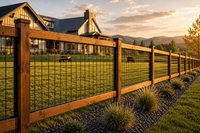
Search 29 articles on metal privacy, hog wire and cattle panel fencing.


-


How to Winter-Proof Your Fence and Gate in Canada
Frost heave, ice load, and freeze-thaw punish Canadian fences and gates every winter. Here's the complete fall checklist to winterize your fence line and keep your gate swinging all season long.
-


How Far Apart Should Hog Wire Fence Posts Be? The 2026 Spacing Guide
Post spacing can make or break a hog wire fence. Too far apart and your panels sag and bow within a year. Too close and you have burned money on unnecessary posts and labour. Here are the exact numbers, the reasoning behind them, and the five variables that shift the math for wind exposure, slope, gauge, containment, and post material.
-


How Deep Should Fence Posts Be in Canada? Frost Line Guide by Province
Frost line depths across Canada range from 45 cm on the BC coast to 165 cm in Quebec. Set your posts above the frost line and they will start heaving within two or three winters. Here is the complete provincial guide, the formula for calculating total post length, and the four steps that prevent frost heave from destroying a well-built fence.
-


Choosing the Right Gate for Your Corrugated Metal Fence
Choosing the right gate involves the right aesthetics, the right construction, the right hardware, and the right long-term considerations. We hope these suggestions will help you and the photo gallery gives you inspiration!
-


Choose the Right Steel Gate for Your Property
Discover why BarrierBoss steel gates outlast ordinary ones by decades. Premium rust-resistant metal frames or precision-treated cedar frames, smart security options, and in-house BARRIERDIRECT delivery guarantee unmatched durability, beauty, and hassle-free ownership. Upgrade to a gate that never warps, rots, or needs repainting.
-


Why Steel Fence Posts Are Becoming the New Standard
When you combine strength, longevity, modern aesthetics, and unmatched low-maintenance performance, it’s easy to see why steel fence posts are becoming the new standard. They outperform wood in every category that counts—durability, stability, compatibility, and long-term value. For homeowners, contractors, and fence builders seeking a smarter long-term investment, steel simply offers the best solution.
-


That Doggy in the Window: Steel Fences with Dog-Friendly Gates
Read the true story of one of our first clients who did something creative with their fence. A small doggy window inserted in a black metal gate panel kept pets happy while reducing stress for dogs, visitors, and neighbours alike.
-


The Advantage of Steel Fence Posts vs. Lumber
Wood posts have been a historical go-to for fencing, but today, steel posts flex many benefits: light, strong, coatable, and longer-lasting than their wooden counterparts. Not only that, but steel stands strong in fires and resists pests and weather like no wood can.
-


Choosing the Right Materials for Your Perfect Entry Gate
Your gate is often your home’s first impression! From timeless wrought iron to easy-care aluminum, sturdy steel, classic wood, or modern composite, each material offers its own balance of beauty, strength, and upkeep to match your home and lifestyle.
-


How Far Apart Should Fence Posts Be: Spacing Made Simple
Key Takeaway Standard fence post spacing ranges from 6 to 10 feet, depending on fence type and material Chain link fences typically require 10-foot spacing between posts Wood privacy fences work be... -


First Impressions Matter: Choosing the Perfect Entry Gate
Your entry gate is more than a barrier. It's your property's first impression and a smart investment. Well-designed gates can increase home values while enhancing security and curb appeal. From swing gates to sliding systems, find out more about picking an entrance that balances style, security, and functionality for your home.
-


How Much Concrete Per Fence Post: Complete Installation Guide
Determining how much concrete per fence post you'll need is one of the most critical calculations for any fencing project. Whether you're installing corrugated metal fence panels, traditional wood fencing, or chain link systems, the right amount of concrete ensures your fence stands strong against wind, weather, and time. The concrete serves as the foundation that anchors your posts firmly in the ground, preventing leaning, shifting, or complete failure of your fence structure.


Let customers speak for us
Great product.

Excellent product. Very rigid and good quality product. We live pretty remote and the delivery was as expected. I will buy from you again.

Love these panels, this is my second time using these for a client. shipping is a great deal if you are willing to wait a little. So just think ahead and you will be happy!
Great panels and delivery
3 of the 10 posts were warped and unusable. They had to be brought back to Barrier Boss and exchanged for straight posts.

Great communication, prompt pickup and worked through some potential headaches with excellent attitude. Would absolutely recommend
Happy with product, definitely not happy with delivery time but that has nothing to do with the product
Love these panels, this is my second time using these for a client. shipping is a great deal if you are willing to wait a little. So just think ahead and you will be happy!
Very nice and friendly gentleman who delivered.
Everything was great . Very positive experience and I would recommend using your company to any of my friends . Delivery Driver was awesome and has mad skills backing that big truck into tight spaces.

Brandon was excellent he dropped everything exactly where I wanted and was very helpful.
These tracks worked great, they do not have holes pre-drilled in them and are quite heavy duty. I preferred this a lot as I could cut and drill as needed!

Brandon was very pleasant and helpful. Great experience.
Awesome hogwire panels and very friendly & helpful delivery drivers! We went with a DIY unframed setup to minimize instructions to the view in the back yard. After our initial order, we decided to take advantage of the rewards credit and get a few extra panels to have on hand in case any get damaged. Both delivery drivers were very nice and respectful of the property. Since neither load was a crane truck, I was appreciative of their willingness to help me unload the panels by hand both times.
Good product and support mark was the delivery driver he did a great job will definitely order from them again
Brandon offered exceptional delivery service.