

Your information source for all things fencing, siding, and roofing -- and more.


-


Will Cattle Panels Keep Pigs In? An Honest 2026 Guide
Cattle panels look tough, but pigs root, push, and test every inch of a fence. Whether panels actually hold them comes down to wire gauge, bottom opening size, and how you install them. Here's the honest breakdown for 2026, plus why 6-gauge, galvanized-after-welding panels outlast the feed-store stuff.
-


Framed Hog Wire: The Open Fence for Patios and Decks
Wood framing with hog wire panels is the look defining Canadian patios and decks right now: open sightlines, airflow, and a boundary that doesn't box you in. Here's how to plan the layout, choose the frame wood, budget it, and pick a panel that won't rust at the welds.
-


Shopping for Hog Wire Fence Panels: What You Have, What You Need, and What Actually Lasts
You've got hog wire panels sitting in your yard, stacked in your garage, or bookmarked in six browser tabs. Maybe you inherited them with a property, maybe you bought a batch from a farm supply store and now you're wondering if they're actually fence-grade. Here's how to assess what you have in four checks, what specs actually matter when buying new, and how to make a decision you won't have to redo in five years.
-


Our Black Hog Wire Fence Panels Use a Dip-Coated Finish. Here's Why That Matters
You've probably seen black hog wire fence panels advertised everywhere. When you dig into what actually makes one panel last and another rust out in a few seasons, the finish is everything. Our panels are dip-coated rather than powder-coated, over hot-dipped heavy galvanized 6-gauge wire, and that combination is why we back them for 40 years while most competitors top out at 15.
-


Best BarrierBoss Hog Wire Panels for Inland Properties
If you live inland, your fence faces a different kind of punishment than coastal properties. No salt spray, but UV hammering through thin dry air, temperature swings from minus 40 to plus 35, alkaline soils, and wind that never really stops. Choosing the right hog wire panel for these conditions isn't about looks. It's about chemistry, wire thickness, and a finish that handles a 70-degree annual temperature delta without cracking, peeling, or corroding from the inside out.
-


How to Shop for Hog Wire Fence Panels: The Complete Canadian Buyer's Guide
Shopping for hog wire fence panels online feels straightforward until you realize that wire gauge, galvanizing method, coating type, and panel dimensions vary wildly between suppliers. The wrong choice rusts at the welds within a few seasons. The right one lasts four decades. Here's exactly what to look for, what to avoid, and how to shop with confidence, whether you're building a backyard fence, a deck railing, or an entire property perimeter.
-


Three Years With Hog Wire Fence Panels From BarrierBoss: What Actually Holds Up
You searched for what happens three years into owning hog wire fence panels from BarrierBoss. Maybe you're considering a purchase and want to know what the panels look like after real Canadian seasons. Maybe you already own them and you're comparing notes. Either way, this is the honest, data-driven breakdown of how these panels perform after 36 months of freeze-thaw, UV, rain, snow, and everything else this country throws at a fence.
-


Hog Wire Fence 6 Ft Tall: The Complete Canadian Guide to Building It Right
A 6 ft tall hog wire fence hits the sweet spot between privacy screen and open-air design: tall enough to keep dogs in and define a property line, open enough to let light and breeze through. The good news is you don't have to build a frame from scratch to get there. BarrierBoss makes a one-piece 6x8 panel, a full 6 ft tall in a single sheet. Here's how to plan the posts, meet Canadian code, and budget the build.
-


What Size Does a Hog Panel Come In? The Complete Guide to Hog Wire Panel Dimensions
You typed "what size does a hog panel come in?" because you're standing in your yard, measuring posts, and you need a real answer, not a vague product blurb. Farm-store panels come in one awkward 16-foot size. BarrierBoss builds eight, from 3x6 to 8x8 feet, in four mesh openings and three frame options. Here are the actual dimensions, what each size is built for, and why wire gauge matters more than any of it.
-


Is There a Difference Between Cattle Panels and Hog Panels? The Complete Canadian Guide
Short answer: historically, yes, and the difference is worth knowing. Practically, if you're buying a modern panel, the answer is more interesting than that. Traditional farm-store cattle panels use a uniform grid; traditional hog panels use graduated spacing. That distinction is a convention of how commodity panels were sold, not a rule about steel. Here's what really separates these two products, what doesn't, and the one spec that should actually decide your choice.
-


TL;DR Hog Wire Fence: How to Get One Built Right
You want the short version on how a hog wire fence gets built, what it costs, and what actually matters. Maybe you saw a gorgeous one on someone's deck railing or property line and thought, "I need that." This guide covers everything you need to know, whether you're fencing a yard, building a modern deck railing, or enclosing a garden, with panels delivered to your curb anywhere in Canada.
-


How Our Black Hog Wire Fence Panels Are Built and Why the Process Matters
Most fence shoppers compare colour swatches and price tags. Smart ones compare how a panel is actually made. Here is the full breakdown of how our black hog wire fence panels are built at BarrierBoss, from raw 6-gauge steel to electrogalvanizing after welding to the dip-coated black finish, and why every step of the process translates directly into decades of performance across Canada's toughest climates.


Let customers speak for us
Great service, reliable and we love our new fence

The panels are tough Like!!!

I especially appreciated the protective sheets provided to ensure that the sheets I purchased weren't scratched or damaged during loading and transport
We purchased the wire fence panels with a custom size. The product exceeded our expectations and was very solid and looked amazing. The customer service from this company is outstanding. From the person taking the order to the yard crew to the delivery guys. We would not hesitate to buy again and have recommended them to our friends. We get so many compliments.
Data delivery and quality product

We have a landscaping business and ordered from Barrierboss for a customer that wanted a larger garden area. Could not be more pleased with the quality. It takes awhile to get the product, but our customer stated "it was worth the wait"- also the delivery driver completely went out of his way to walk all pieces up our driveway as we were not home and we didn't want it at the end of driveway. He was great! Will be ordering from them again!
Worked great

Excellent product!

Great company. Awesome product and customer support.
Provided additional custom cut panel lengths from 6 feet to 9 feet for fence sections over 6 feet tall.
Have been dealing with barrier boss for two years now and they are THE best out there worldwide! Just excellent quality of material, and great communication. Looking forward to continuing business with them
The fence was everything we wanted to enhance our home.
The Panels were very easy to install:
1) dig 2 post holes
2) level the fence panel horizontal
3) drop one post into the hole
4) attach the panel to the first post and brace it level vertical
5) install the second post and brace the section
6) keep going and then pour concrete into each post hole.
I like the fencepost that came with metal and wood panels they are a good match.
I am confident that the order i am waiting for will be a close match also. I have recommended barrier boss to my friends who live in the kootenays.
Great product and service
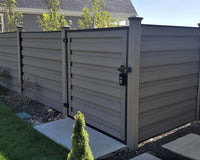
We replaced a 30 year old fence with the corrugated metal fence. It made the cedar hedging look much greener and it is nice to look at. It was quite easy to install. I am patiently waiting for the next order to be delivered so we can finish it off.
